

online safetydigital parenting
21.01.2026
Family Link vs. Tutorina:two approaches to the same problem. What should you choose for your child?
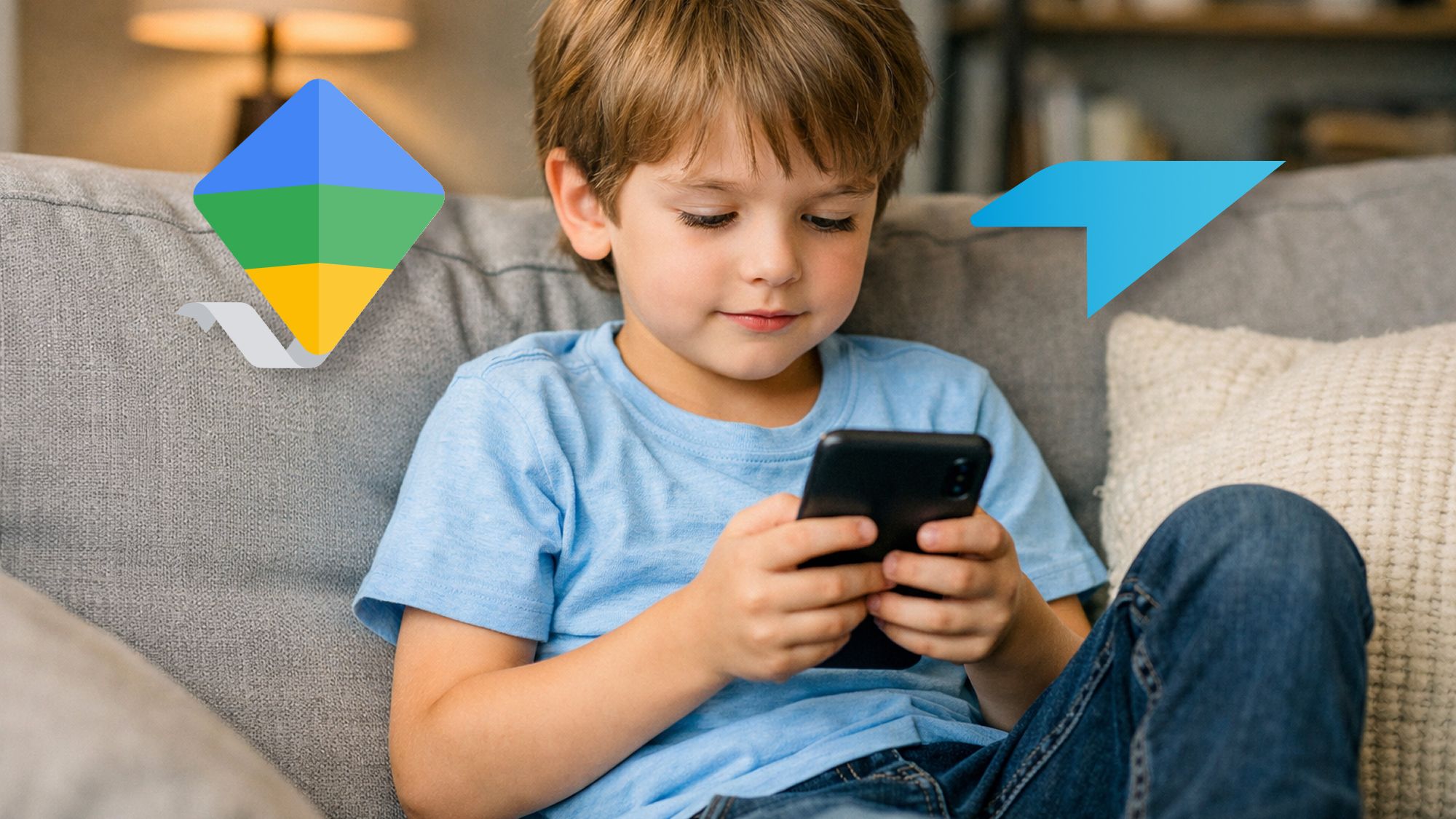
When a child gets (or already has) a phone or tablet, most families quickly arrive at the same questions: how much screen time is "too much," how do you keep them safe online, and how do you avoid daily fights over "just 5 more minutes." In day-to-day life, the issue is not only technical, but also relational: rules, limits, negotiation, consistency. Two very commonly used parental control solutions are Google Family Link and Tutorina. Both can reduce risks and bring structure, but they start from different philosophies: one is oriented toward technical administration within the Google ecosystem, while the other focuses on digital balance, education, and parent-child collaboration.
1 - The underlying philosophy: technical control vs. balance and responsibility
Google Family Link - technical, simple control in the Google ecosystem
Family Link is Google's official solution for managing a child's account and phone (especially Android). It allows you to:
- set time limits and schedules (for example, bedtime downtime),
- approve/block apps from the Play Store,
- apply filters for certain Google services (Chrome/YouTube, depending on settings),
- see your child's location through Google services.
The core functionality targets safety and technical administration: the parent configures, and the child's phone use is limited by these settings.
Tutorina - digital education + parental control + balance in the parent-child relationship
Tutorina takes a different approach: parental control built around the idea of balance, motivation, and dialogue. It is an education and parental control app, created together with psychology specialists, that aims to turn the phone from a source of conflict into a tool with clear rules and educational meaning.
In addition to standard parental control functions, Tutorina adds:
- screen time earned through responsibility-building or educational activities (homework, tidying up, sports, reading, in-app quizzes),
- educational time (can be used for apps set by the parent as educational),
- age-appropriate educational quizzes and exercises (math, Romanian language, geography, and others),
- detailed reports on phone use and learning progress (time spent in apps, links accessed on TikTok, YouTube, or in the browser, completed activities, quiz scores, and more).
- extended safety features (including alerts for bullying on WhatsApp and alerts when personal data is sent),
- personalized recommendations for parents, based on the child's age and digital behavior,
- the Buzz function (a loud sound signal even if the phone is on silent or Do Not Disturb),
- location history, not just the current location.
Tutorina helps parents and children build healthy digital habits by promoting responsibility, digital education, and reducing conflict through collaboration.
2 - What "real life" looks like with each app
With Family Link: "I set it, you follow it"
In most families, Family Link works like a control panel where:
- the parent sets the limits,
- the parent approves the apps,
- the parent configures the filters,
- the child receives the rules.
It is an efficient solution when you need quick and simple control, and it is especially suitable for younger children or for those who cannot yet manage self-regulation on their own.
With Tutorina: "clear rules, but also motivation"
Tutorina shifts the dynamic from "restriction" to balance:
- the parent sets the maximum daily time the child can spend on screens and a list of daily tasks (such as "do your homework," "read the lesson," "tidy your room"), and can adjust the "cost" of time depending on how involved the child needs to be in activities and quizzes.
- the child can use screen time within the set limit, depending on how many tasks and educational quizzes they complete.
Gamification turns activities into steps of progress: as the child completes tasks and quizzes, they advance through levels.
The parent can give likes and dislikes for the child's activities depending on how well they are done. If the activities receive more dislikes, the cost of screen time can increase, encouraging the child to get involved more responsibly and learn self-regulation.
Screen time is no longer just a restriction-it becomes an educational currency: the child learns autonomy, self-discipline, and responsibility within a predictable and motivating system.
3 - Safety: online, offline, and social (where most problems appear)
Both apps offer usage time limits and location tracking, but they differ in the level of detail and refinement of protection.
Family Link: very good in the Google area
- filters and controls integrated with Google services,
- management of the child's account,
- location tracking through Google infrastructure. It is a solid solution for families that heavily use the Google ecosystem.
Tutorina: extended protection + a "psycho-social" layer
In addition to location, Tutorina adds:
- safety zones and location history,
- web filtering by categories and keywords,
- uninstall protection (the app can be uninstalled from the child's phone only using the parent code),
- the Buzz function (a loud sound signal even if the phone is on silent / Do Not Disturb),
- specific alerts for sensitive situations such as bullying and sending personal data.
In short, Tutorina also covers the area that, in many families, produces anxiety and conflicts: safety in conversations and digital behaviors, not only technical settings.
4 - Cost and compatibility: "free in the ecosystem" vs. "independent, with a subscription"
- Family Link is free, but it works most naturally in the Google ecosystem (especially Android).
- Tutorina is independent of Google or the phone's operating system, available on Android and iOS, with a monthly or annual subscription and a 14-day free trial period.
Because it does not depend on Google or Apple, it can work across different platforms: for example, the parent can have Android and the child iOS, or vice versa.
The decision between the two options is pragmatic and depends on the family's budget, the devices available, and how much the educational and collaborative component matters.
5 - Comparison table (briefly, so you can see the difference at a glance)**
| Google Family Link | Tutorina | |
|---|---|---|
| Main purpose | Technical parental control | Digital education + parental control |
| Cost model | Free | Subscription (with 14-day free trial) |
| Optimal use | Android / Google ecosystem | Android & iOS |
| Time limits | Yes | Yes + time earned through activities/quizzes |
| Sleep time | Yes | Yes |
| Educational time | No | Yes |
| App control | Approval / blocking | Allow / forbid + mark apps as educational |
| Content filtering | Google services (depending on settings) | Web filter by categories + keywords |
| Educational content | No | Yes - quizzes and subject-based exercises |
| Gamification | No | YES - progress levels + screen time based on completed activities |
| Sound signal | No | Yes (BUZZ function) |
| Phone lock | Yes | Yes |
| Online social safety | Mostly through filters | Additional alerts (e.g., bullying / personal data, where available) |
| Location | Yes + safety zones | Yes + safety zones + history |
| Child approach | Rules are imposed | Rules are negotiated and accepted |
| Parent insight | More control | Reports + progress + personalized recommendations |
6 - Conclusion: there is no "best app," there is the right match for your family
Choose Family Link if:
- you want quick technical control at no extra cost,
- your child uses Android and a Google account,
- your main goal is basic administration and safety.
Choose Tutorina if:
- you want to reduce conflicts by involving your child in setting the rules,
- you want motivation and responsibility, not just limitation,
- you want screen time to include learning (quizzes/exercises) and real-life activities,
- you need detailed reports, personalized recommendations, and extended safety features (web filter, safety zones, Buzz, uninstall protection, etc.).
In practice, for some families a combination also works: Family Link for basic control in the Google ecosystem, plus Tutorina for the educational component, gamification, and reducing the tensions caused by children spending too much time on the phone.